Forest Hill Studios (1957 – 1962)
1957 – 1962 Alan Gallery, Forest Hill, South London.
At first in partnership with other ex Goldsmiths students. Partnership dissolved 1960.
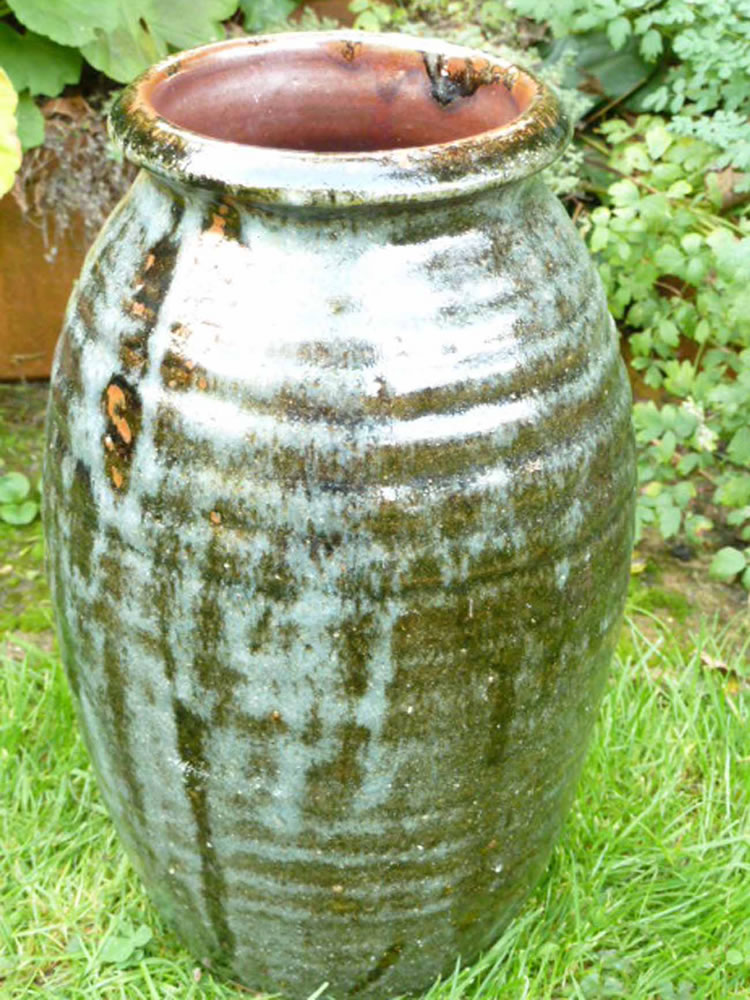
My first pot production in quantity was of tall cylindrical coffee mugs, the handles low down. Also deep, generous soup bowls. My only glaze at first was a white tin glaze. The coffee mugs had broad vertical brush marks, from oxide mixtures, either a grainy greenish brown or a soft greyish blue. I also made a variety of oval press moulded dishes decorated with motifs in broad brushstrokes, sometimes with sgraffito details or patterning.
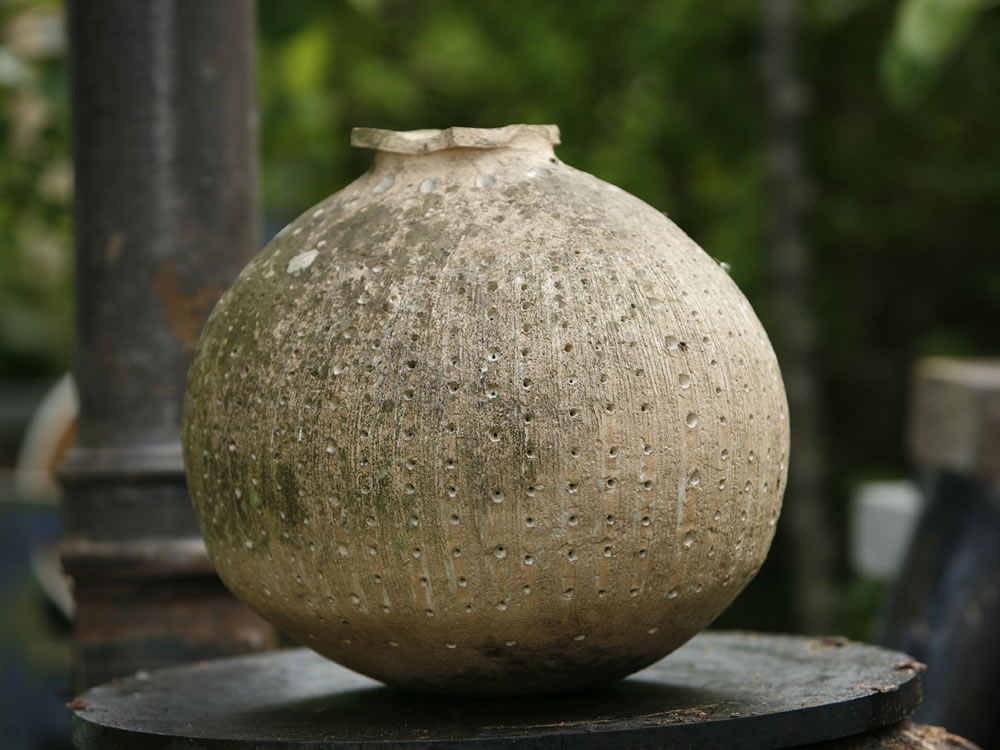
Finding repetitive work of this kind tedious and demanding a rigid time schedule, I began developing various lamp base forms and some pierced forms intended as lighting features. These pieces were either thrown or coil built. I used areas of contrasting textures and high relief additions intended to cast shadows and exploit the fall of light across the forms.

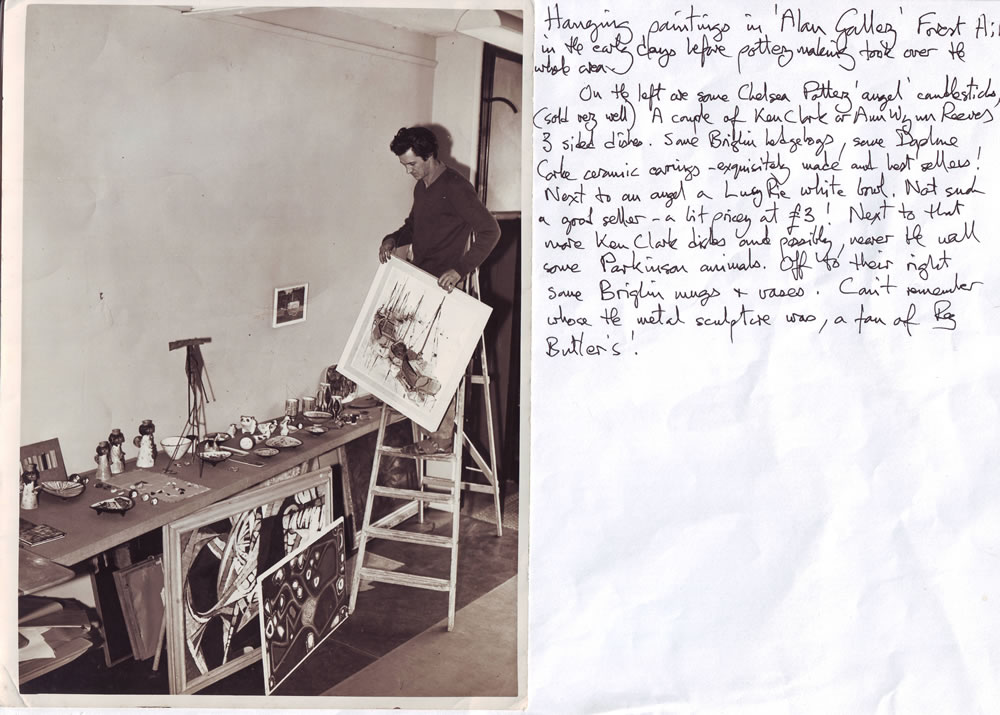
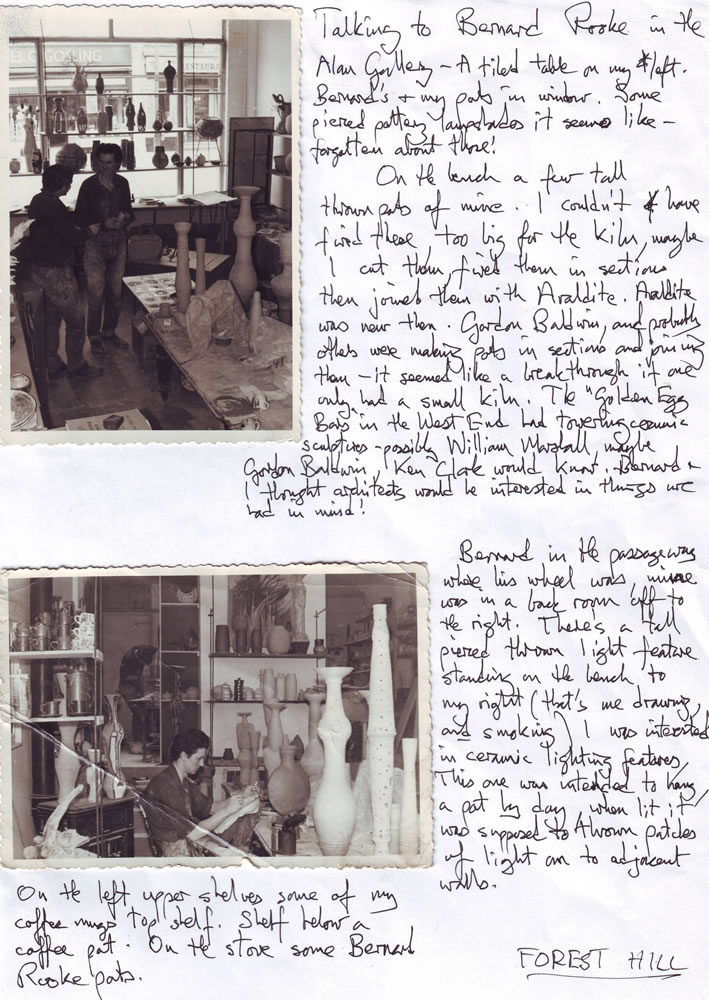
The following notes refer to the images below (Alan gallery pics notes by Alan Wallwork)
Image 1 – Picture 1 :
Hanging paintings in ‘Alan Gallery’ Forest Hill in the early days before pottery making took over the whole area. On the left are some Chelsea Pottery ‘angel’ candlesticks (sold very well) A couple of Ken Clarke or Ann Wynn Reeves 3 sided dishes. Some Briglin hedgehogs, some Daphne Clarke ceramic earrings – exquisitely made and best sellers! Next to an angel, a Lucy Rie white bowl. Not such a good seller – a bit pricey at £3! Next to that more Ken Clarke dishes and possibly, nearer the wall some Parkinson animals. Off to their right some Briglin mugs and vases. Can’t remember whose the metal sculpture was, a fan of Reg Butler’s!
Image 2 – Picture 1 :
Talking to Bernard Rooke in the Alan Gallery – A tiled table on my left. Bernard’s and my pots in the window. Some pierced pottery lampshades it seems like – forgotten about those!
On the bench a few thrown pots of mine. I couldn’t have fired these, too big for the kiln, maybe I cut them, fired them in sections then joined them with Araldite. Araldite was new then. Gordon Baldwin, and maybe others were making pots in sections and joining them – It seemed like a breakthrough if one only had a small kiln. The “Golden Egg” bars in the West End had towering ceramic sculptures – possibly William Marshall, maybe Gordon Baldwin, Ken Clarke would know. Bernard and I thought architects would be interested in things we had in mind.
Picture 2 :
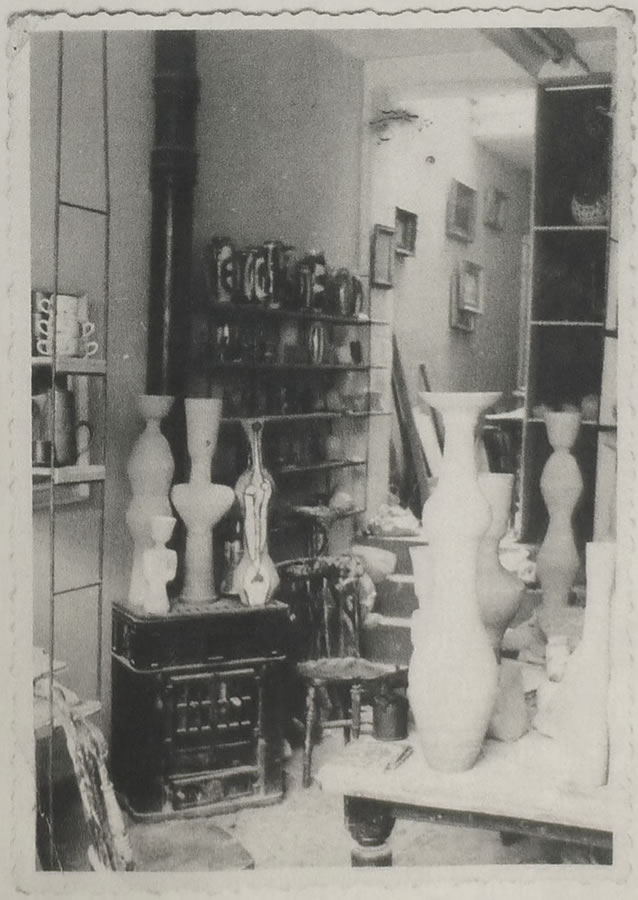
Bernard in the passageway where his wheel was, mine was in a back room off to the right. There’s a tall pierced light feature standing on the bench to my right ( that’s me drawing and smoking). I was interested in ceramic lighting features, this one was intended to hang, a pot by day, when lit it was supposed to throw patches of light on to adjacent walls.
On the left upper shelves some of my coffee mugs top shelf. Shelf below a coffee pot. On the stove some Bernard Rooke pots.
Additional note – An early pierced bowl by Alan on the top shelf at the back of the shop (JJ)
Image 3 – Picture 1 :
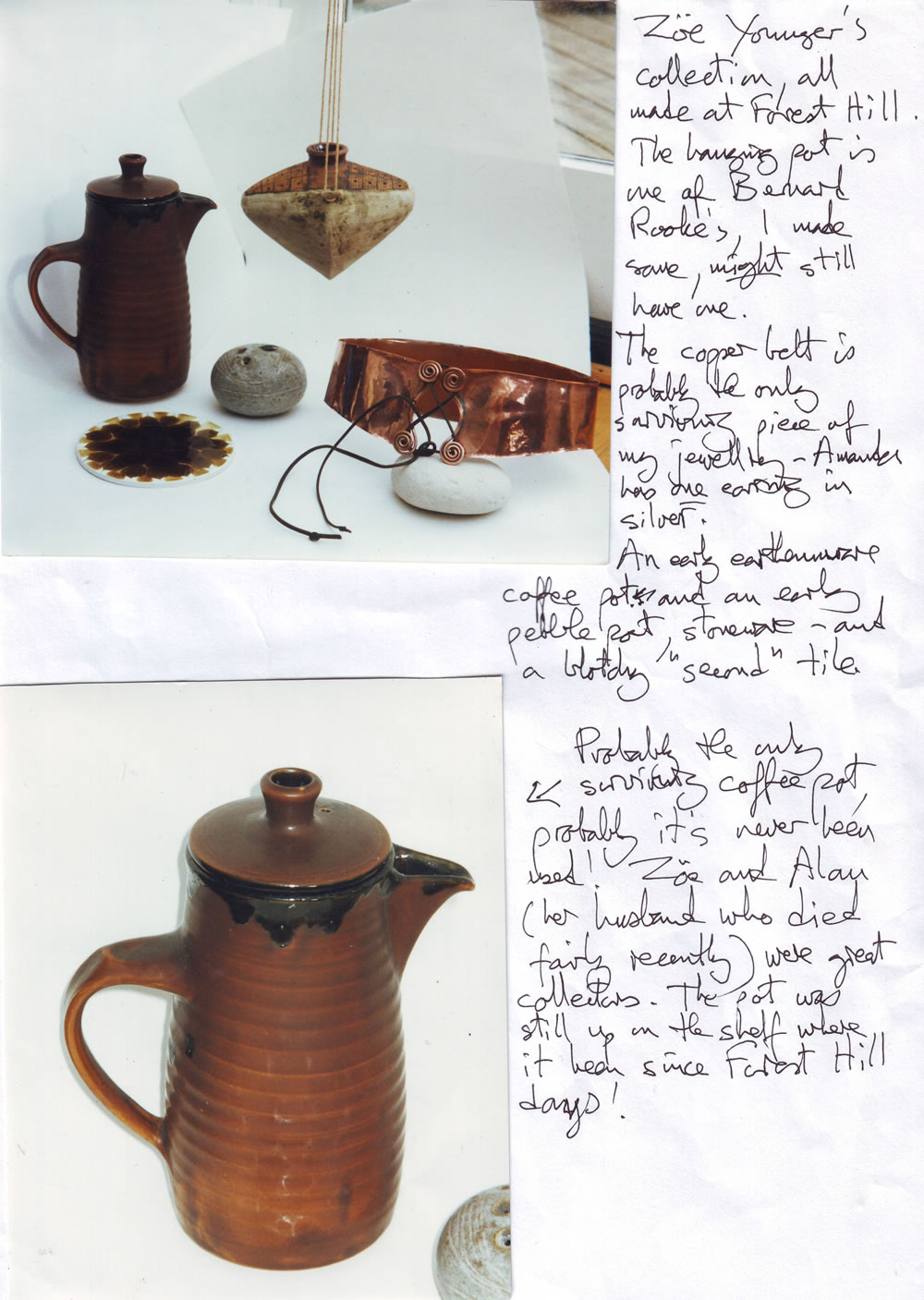
Zoe Younger’s collection, all made at Forest Hill. The hanging pot is one of Bernard Rooke’s, I made some, might still have one. The copper belt is probably the only surviving piece of my jewellery, Amanda has one earing in silver. An early earthenware coffee pot and an early pebble pot, stoneware – and a blotchy “second” tile.
Picture 2 :
Probably the only surviving coffee pot, probably it’s never been used! Zoe and Alan ( her husband who died fairly recently ) were great collectors. The pot was still up on the shelf where it’s been since Forest Hill days!
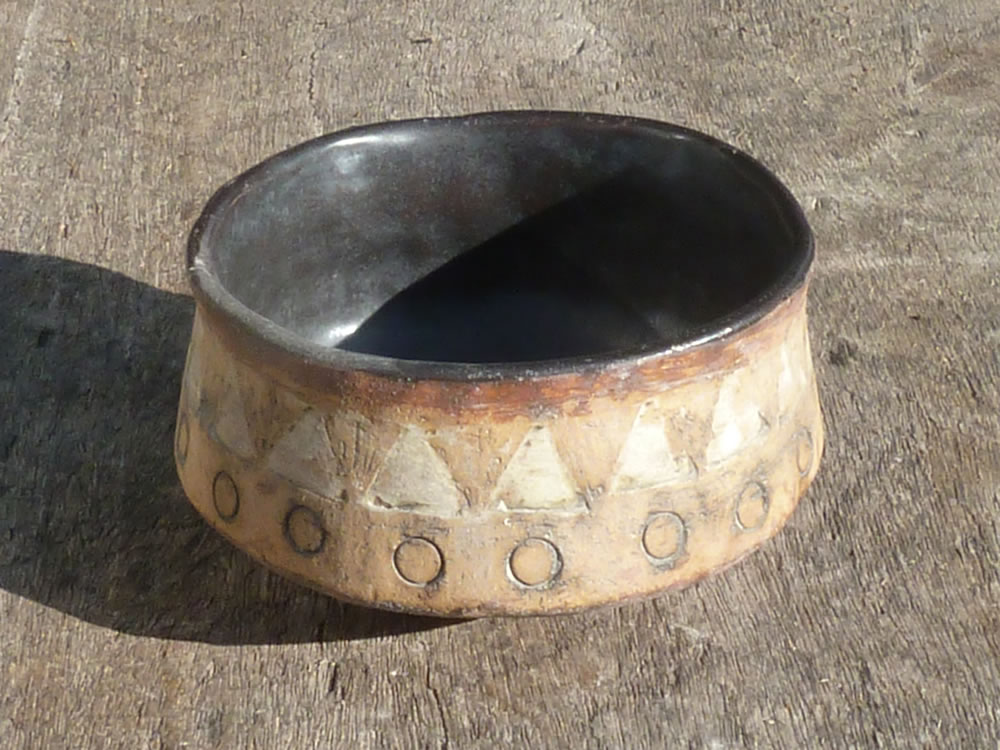
I also used high relief on a range of forms intended as containers for flower arranging, also using piercing decoratively. I also continued my interest in coil built organic, gourd like forms and also a few “pinch” bowls, a waxy black matt glaze within, textured with white slip inlaid patterning externally.
I continued in a modest way to make coffee jugs with matching small cylindrical mugs, very thinly thrown. For these I used a velvety matt brown glaze for exteriors, a very high gloss blue black for interiors. These were lead bisilicate glazes, the recipes coming I think from someone at Goldsmiths. These glazes were fired to 1100 degrees in the secondhand electric top loader kiln I had bought for £60, grudgingly lent by Westminster Bank. Internally it was about 18” square, about 16” deep. It was the most powerful that could be operated on a domestic cooker supply.


Different views from inside the Alan Gallery, a selection of Alan’s and Bernard’s pots are visible.


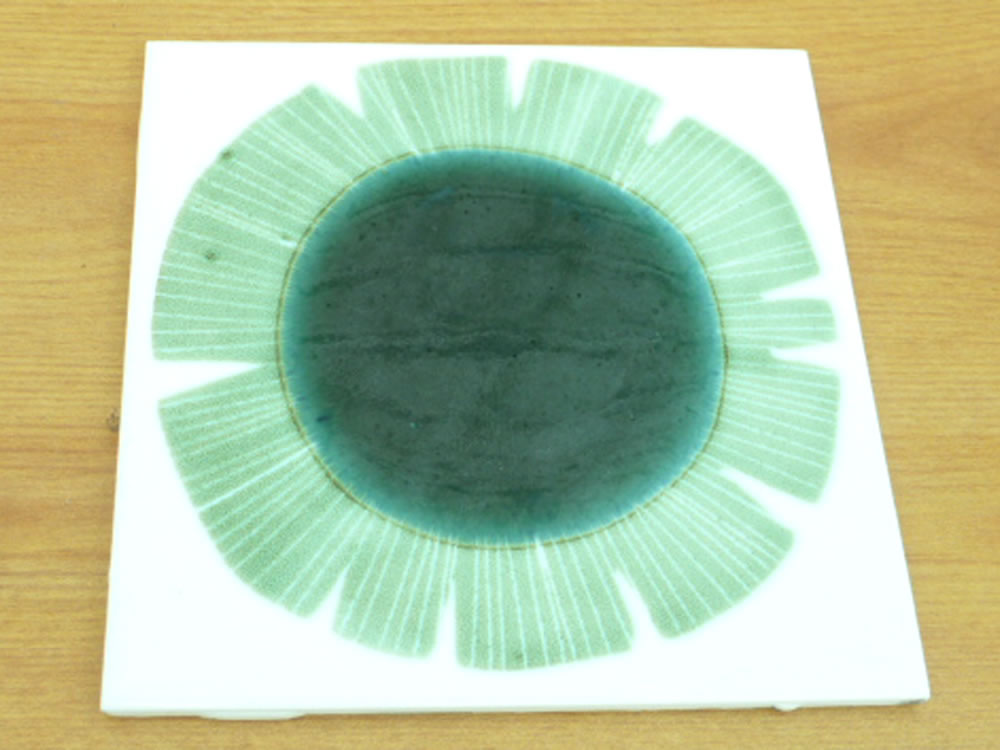
Using variations on the same base glazes, a matt and a gloss, I experimented with other colour ranges, blues, greens, amber and white. Tile topped tables were then in vogue and I tried out my techniques on a panel of white glazed commercial tiles. I brushed on a large fish shape across the panel, using my matt glaze, the high china clay content aiding adhesion of the brush strokes to the glossy surface. When the base glaze was dry I dripped on various gloss glazes using a slip trailer, trying differing size of blobs and varying proximities.
I then separated the tiles and, when dry, fired them in the top loader. I was intrigued by the reaction of the glaze blobs, with the base glaze and in proximity to each other, instead of flowing together the base glaze separated them with a network of fine lines. I then brushed on a variety of motifs on to single tiles, pushed the borders of the wet motifs with my finger into shapes, then dripped on blobs of glaze in lines, concentric rings etc. and fired a kiln load.
I put a batch on display in our show window and they sold almost immediately and I made some more, which also were snapped up. Then a retailer customer of mine visited and bought a dozen or so. He phoned soon after to order several dozen, and so it went on, the kiln was kept in constant use. I submitted samples to the Design Centre and they were accepted for the Design Index and widely displayed. After that demand seemed constant and gave me a steady, controllable income so that I could concentrate on sculptural forms of many kinds.
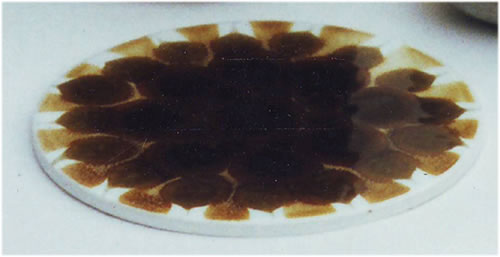
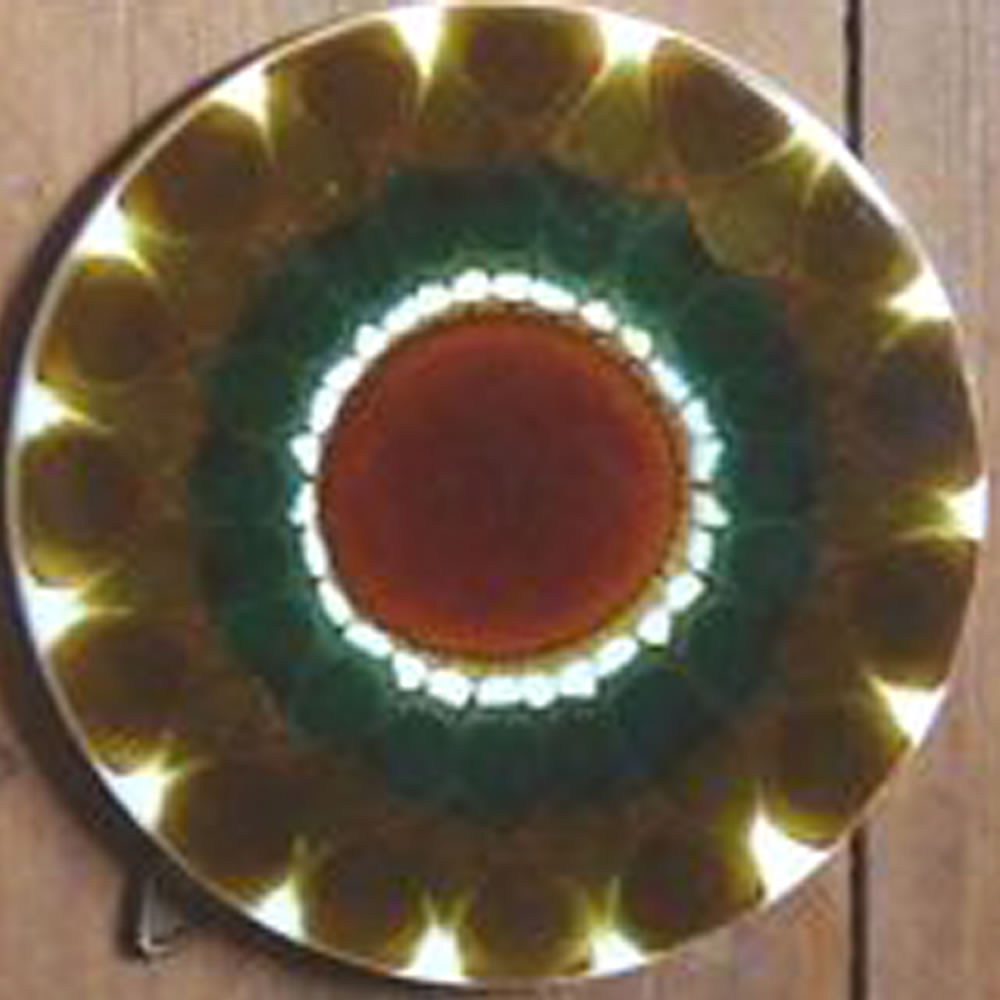
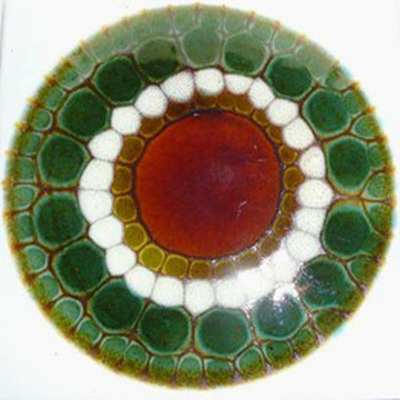
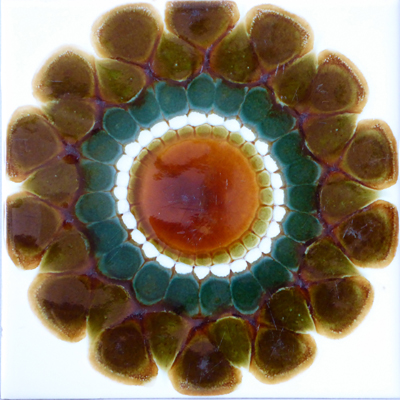
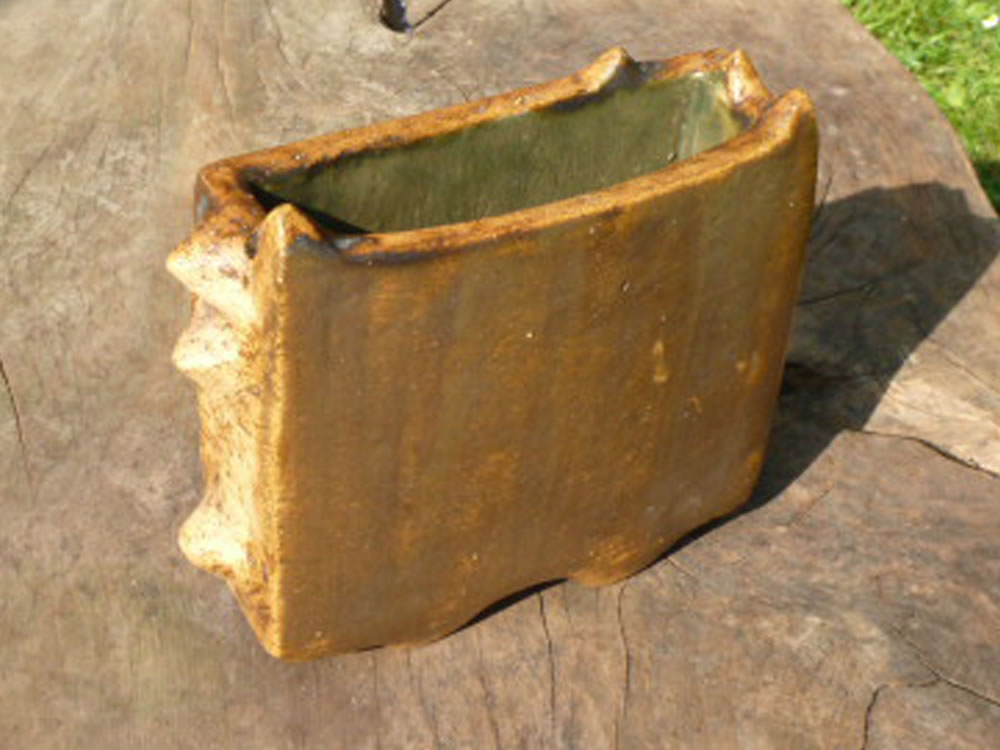
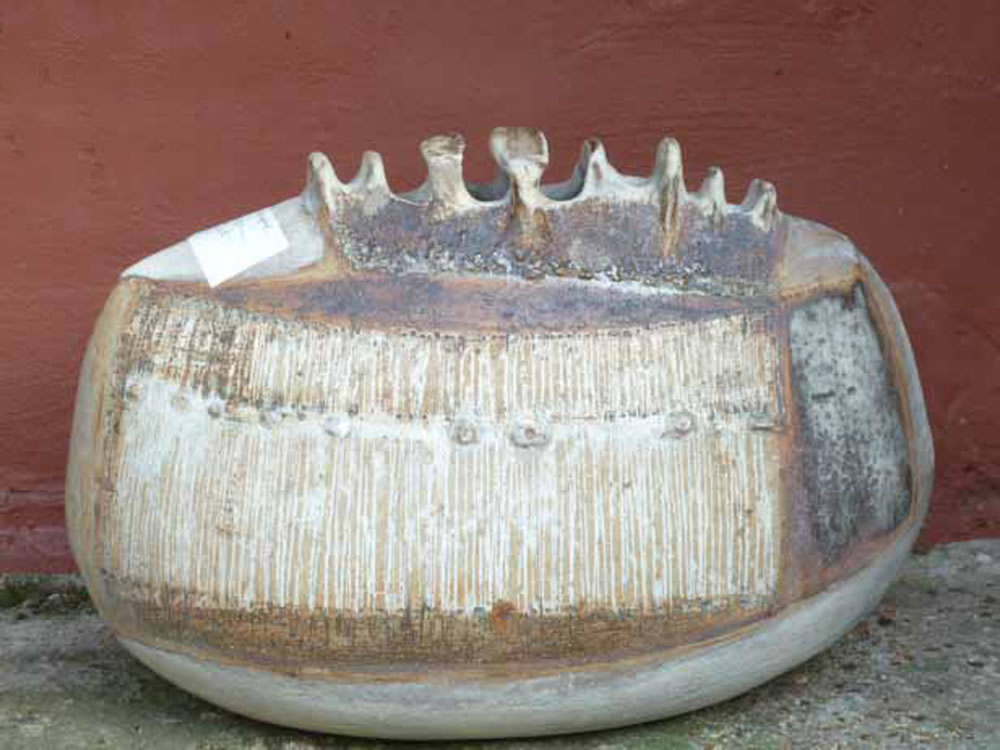
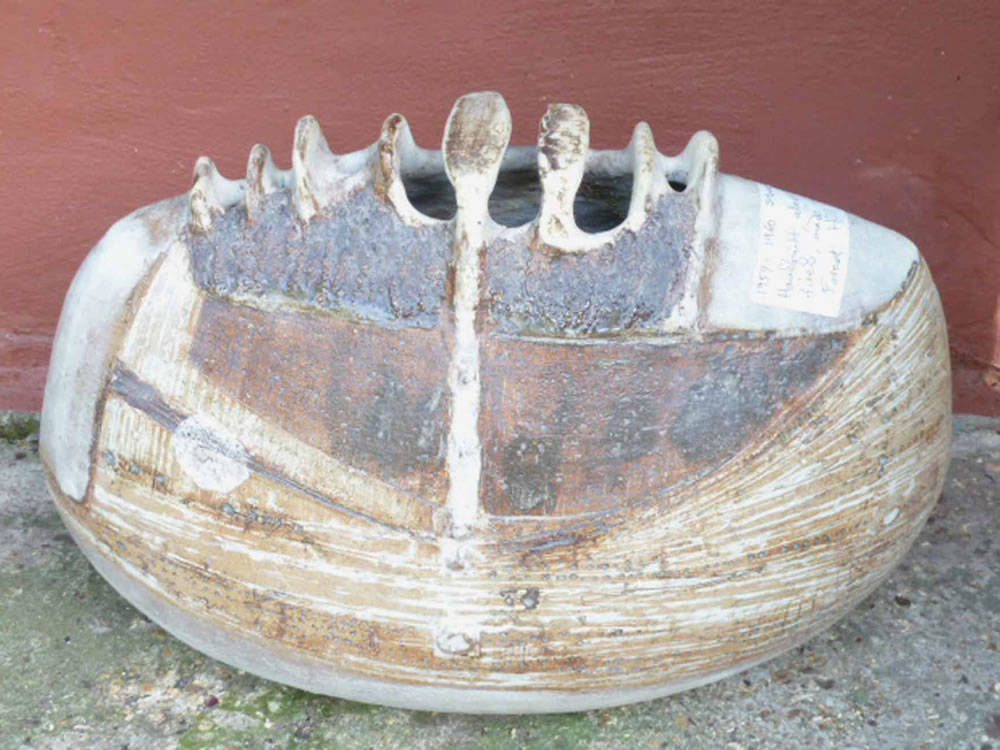
I was hoping to find architectural applications for hand built stoneware. I dropped tableware production entirely. I was able to afford another small electric kiln, more capable of reaching stoneware temperatures with the top loader being relegated to tile firing. I had fired it to stoneware temperature only once or twice, the sculptural “handbag” form which I still have, being my first largish high fired form. It was coiled up from a press moulded base, made in one of my oval dish moulds, left in the mould for support as I built up the form, adding panels of texture, adding fired granules to slipped areas, trying out effects, inlaying other slip colours, modelling on additions, just seeing how it looked.

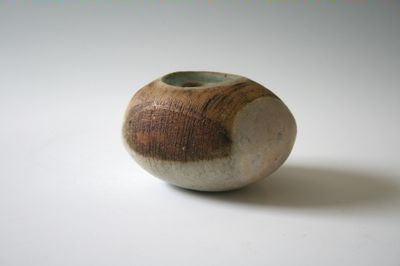
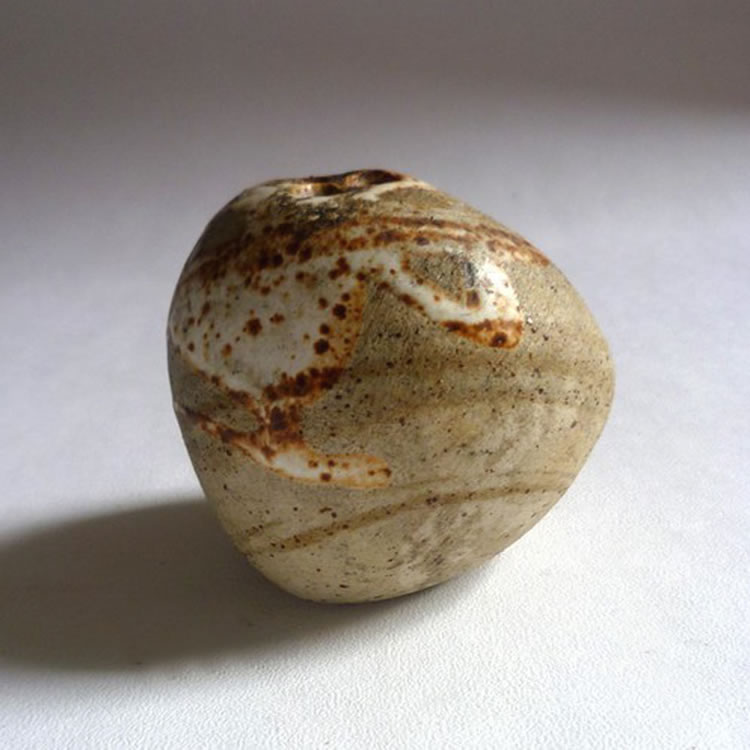
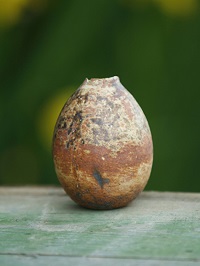
My first “pebble” forms were made at Forest Hill, thrown forms, closed in and beaten into oval “sea worn” forms, apertures given various treatments, “dishing” etc. I also rouletted on to panels of added soft clay with cylindrical carved plaster rollers. Some of these “pebble” forms were submitted to the Design Centre, accepted and sent for exhibition overseas.

At some point, perhaps by 1960 the partnership with other ex Goldsmith students had been amicably dissolved and Bernard Rooke had come to occupy some space in the gallery which, by then bore little resemblance to its original use for mainly displaying paintings with some shelving displaying bought in pottery from a range of mostly London potters. Now all the benches and shelves were crowded with pots under construction, kilns were in constant use and there were our two potters wheels. I only had legal rights to use the premises for retail. I needed a workshop with light industrial permission in a hurry.