Forest Hill Studio
The Alan Gallery, Forest Hill, South London, 1957 – 60
At No.4 Imperial Buildings, Forest Hill, Alan converted a shop into a studio with a selling gallery and accommodation. He planned to sell his own work along with that of a collective of other ex-Goldsmiths’ students. He also bought in work from established potters to sell on, including such illustrious names as Lucie Rie, Ann Wynn Reeves, Ken Clarke, David Eeles, Chelsea Pottery and notably Briglin Pottery, part owned by Brigitta Appleby who became a very close friend of Alan’s.
In 1958 Wallwork produced mainly utility items, earthenware coffee pots, cups, dishes and bowls, and some earthenware and stoneware vases. Alan discovered a new method of decorating tiles which sold well from the gallery. He said that if it had not been for the tiles, the gallery may not have lasted beyond 1958. He submitted tile designs to the Design Centre which were accepted and put onto the Designs Index. The tiles and pottery went on exhibition tours around Europe.
By 1959 Wallwork was developing new styles and techniques in stoneware, and the production of earthenware goods came to an end. This was a period of discovery and there was an array of different shapes and decorative effects created. Lamp bases, light features, bowls, oval and pebble forms, ‘hanging’ pots and pinch pots were also made. Pierced works originated from here too, developed for the production of experimental lightshades which threw beams of light. Totemic decoration developed at this time too.
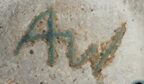
Alan was using a small electric kiln. Rubbed on oxides were used to give a warm toasted effect. Surfaces were often incised and then overlaid in white slip, impressed decoration utilizing ‘roulette’ stamps and symbols was another common practice. Some biscuit fired clay was coated in copper carbonate which mimicked the reduction effect of reduced oxygen firing. Alan began to mark his work with an incised ‘W’ to the base, he also trialled a ‘W’ stamp, but only for a brief period.
Working in copper and silver Alan also made jewellery. Rings, bracelets, and copper belts with celtic designs were crafted along with a few other pieces such as a copper lamp base which Alan still owned in his old age. He also carved some wooden items. These more unusual ventures were all made in only very small numbers and outside of Alans family and friends none are known to exist.
In 1958 it had become clear that of the ex-Goldsmith students only Alan was having any commercial success, and so their arrangement came to an end. With the studio to himself Alan sought an assistant, but instead he accepted the potter Bernard Rooke as a fellow and kindred spirit. Wallwork allowed Rooke workspace and use of the kiln facilities. At this point there was a fair degree of convergence between the two potters’ individual styles. They both produced totemic pots which apparently had secret messages on them, but perhaps only Wallwork and Rooke could decipher them. There are no records of their meaning.
1959 saw further experimentation at the Alan Gallery as Wallwork tested different glazes. Sometimes he would deposit a reflective crystalline glaze pool inside the bases of pots. Alan found a method of coating pots with porcelain slip sometimes with additional glazes.
The humorous stoneware “Handbag”, unusual for being a pure art piece with no real-world use, was produced. The Handbag was Alan’s first ‘high-fired’ work. Also that year he was commissioned by The Department for Work and Industries to build lamp bases for the British Embassy in Nigeria. Commercial success was helped along when the prestigious London department store Heals put in orders for tiles and pots. There was one issue that could have caused Wallwork problems, the lease at Forest Hill was solely for retail space, so technically firings there were illegal, and Alan was running two kilns by this time. Production moved on to the Greenwich Studios.
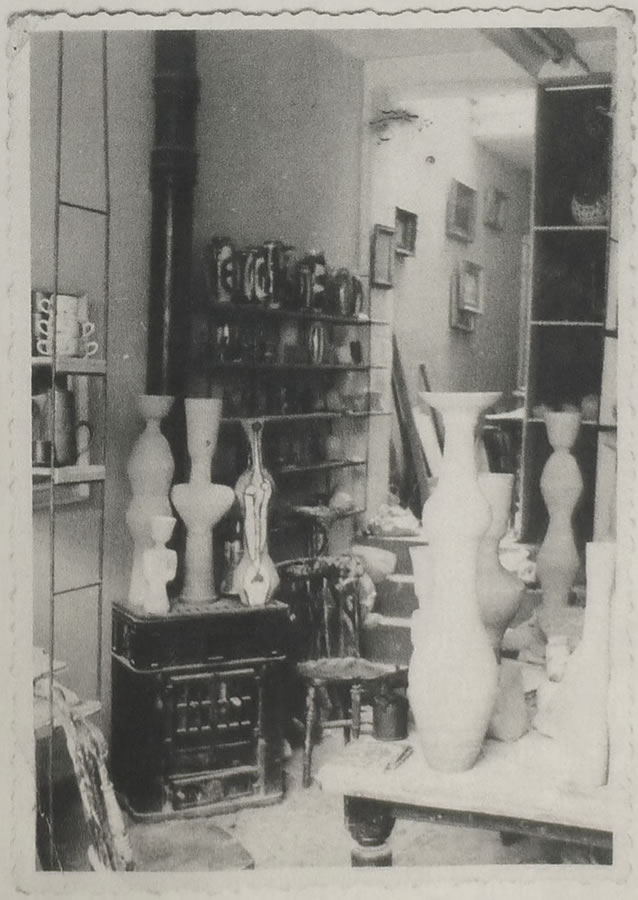
Different views from inside the Alan Gallery, a selection of Alan’s and Bernard’s pots are visible.


Here follows a selection of work produced at the Forest Hill Studios
Decorated Bowl

Gourd Form

'The Handbag'

Pebble Form

Hanging Pot

Grooved Hanging Pot

Tool Form

Footed Globular Form

Pebble Bowl

Pebble Bowl

Unfinished Light Feature
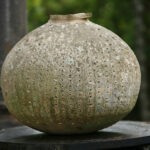
Hand Glazed Decorated Tiles

Ovoid Form

Grooved Bowl

Grooved Pot

Grooved Cylinder

Ovoid Form
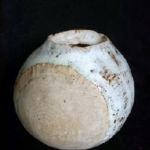
Pierced Grooved Bowl

Pebble Form
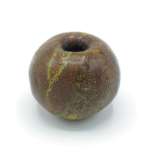
'Ring Dot' Hanging Pot

Standing Stone Lamp Base

Ovoid Form
