Exhibitions and Media
C.P.A – Craftsman’s Potters Association
C.P.A. (Craftsman’s Potter’s Association) founded in 1958 by studio potters. Alan was one of these original members. Meetings were arranged and potter’s work submitted for grading. The best of which were displayed at the CPA shop in London. Alan became an elected council member in the early 60’s, but became less involved once he moved to Marnhull in 1965. He did however submit articles for inclusion in the C.P.A.’s magazine ‘Ceramic Review’, listed below.
Ceramic Review 8 – 1971 – ‘Workshop Practice’ – Article about Alan’s studio operations, with supporting photo’s and front cover image.
Ceramic Review 115 – 1989 – ‘A Potter’s Day’
Ceramic Review 156 – 1995 – ‘Destined For The Deep’
Ceramic Review 160 – 1996 – ‘A Touch Of The Vapours’
Books Featuring Alan Wallwork
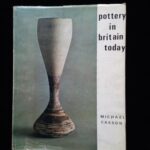
Michael Casson – Pottery in Britain Today.
Publisher : Tiranti (01 Dec 1967)
ISBN : 9780854587582
Paul Rice – British Studio Ceramics in the 20th Century.
Publisher : Chilton Book Co (01 Sept. 1989)
ISBN-10 : 0801980038
Jeffrey Jones – Studio Pottery In Britain 1900-2005.
Publisher : A & C Black Publishers Ltd (29 Nov. 2007)
ISBN : 13978-0713670134
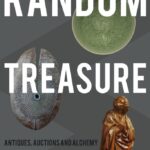
Roger Stewart – Random Treasure (Antiques, Auctions and Alchemy)
Publisher : Book Guild Publishing Ltd. (28 Sep. 2017)
ISBN-10 : 1912083558
Chris Blanchett – 20th Century Decorative British Tiles, Commercial Manufacturers : J – W
Publisher : Schiffer Publishing Ltd (US); Illustrated edition (15 Jun. 2006)
ISBN-10 : 0764324675
Exhibition Info
“Lampbase Exhibition” – Early 1960’s, London. (No year date or location)
The Design Centre – European and U.S.A. exhibitions 1960’s – Alan’s pottery and tiles were included in large exhibitions promoting studio ceramics.
“Birth Marks and Earth Works” 1999 – Bridgwater Arts Centre, Dorset – Joint exhibition of Alan’s pottery and his daughter Amanda’s art work.
Harlequin Gallery, Greenwich, London. Solo exhibitions of Alan’s work were held between 2000-2008, introducing Alan Wallwork’s pottery to a wider collector base and first exposure to the internet.
“Three Generations of Maker’s” – Walford Mill, Dorset 2008 – Alan Wallwork sculptural pottery, with his daughter Amanda’s artworks in oil and plaster and his grandson Rowan Strickland’s carved Greenwood sculptures.
Oxford Ceramics, Oxford, Berkshire. Annual exhibitions from 2008 -2012, including an Alan Wallwork “Retrospective” exhibition, featuring work spanning over 50 years.
The following links to an e-catalogue of this exhibition – (www.oxfordceramics.com/publications/6-alan-wallwork-a-retrospective/)
“Earth and Stone – Wallwork and Wallwork Exhibition” 2015, Belgrave gallery, St.Ives, Cornwall – Father and daughter have the last exhibition of Alan’s pottery along with Amanda’s artwork.
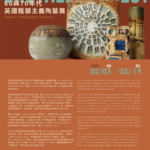
“Brutally Honest – 1960’s & 70’s English Ceramics Exhibition” Feb / Mar 2023, Yinnge Ceramics Museum, Kyoto, Japan. A solo piece of Alan’s work was featured in this celebration of 20th Century English brutalist studio ceramics.
“Earth | Ground Exhibition”, Bridport, Dorset 13th May – 10th June 2023 – Amanda Wallwork exhibits an archive collection of her father’s pottery and her artwork.
Public Collections
Coventry Mead Gallery, Warwickshire
University of Warwick, Warwickshire
University of Derby, Derbyshire
Liverpool Museum, Liverpool
Victoria and Albert Museum, London
Salisbury & South Wiltshire Museum, Wiltshire
Stoke-on-Trent City Museum & Art Gallery, Staffordshire
Alan Wallwork – In His Own Words

To have been making pottery for so long came about accidentally, as I shall explain later. If I had encountered certain influences strongly enough, I might well have been permanently deterred. I had tried my hand at wood carving and working in silver and copper before I taught myself some of the pottery skills. I could see that jewellery making might earn me a living, and it would involve a workshop, flame and drama too…
Blurring the look and feel of things with shrink wrapping was a long way off when I was little, out shopping with my mother. I could learn how things felt, as well as watch skilful things being done. There was much to smell as well. My mother bought sugar loose at Arthur East’s – a corn, seed and fuel merchants. This was a long bare wood floored cavern with a high wooden counter to one side. There, one of the brown coated men dug into one of the bins behind him with a grey metal scoop, tipped the contents into a gleaming brass scoop on his scales with their handsome brass weights, then poured out the sugar onto a big sheet of thick blue paper. Then he did some origami and a plump parcel appeared without use of string, tape or anything else. Just clever folding. I, meanwhile, was free to dive my hands into any of the long rows of bulging open sacks in lines down the shop floor, their tops neatly rolled down. They held wheat, barley, oats, dried peas, beans, and on and on. Some held dog biscuits in many shapes and sizes, some were multicoloured and looked tasty. They were not, I found! Coal was on show in an adjoining room. Shallow trays held samples in many grades and lump sizes, many different patinas and smells.

Back in the street again there would often be more to watch and wonder at. Men doing fascinating, skillful things. A man up a ladder painting ornate lettering above a shop front with brush and mahlstick. I marvelled at his steadiness of hand as the letters were outlined and filled, with flourishes. Somewhere else a man might be burning off old paint before repainting. This was really dramatic, beginning with the ritual of firing up his blackened brass blowlamp. First the warming up from the almost invisible delicate blue flames of methylated spirits. Then main ignition after pumping up pressure in the paraffin reservoir. The thrilling, throbbing, long blue flame leaping out and the man letting it lick over an area of old paint until the surface began to heave, blister and bubble and then his metal scraper blade followed the flame, lifting long writhing snakes of molten paint, often still flaming as they fell to the littered pavement. The smell beckoned from afar. Solvents then had good smells, turpentine, linseed oil, none then minded the high lead also in the paint. Sometimes there would be someone putting in a window, thumbing putty down the edges, smoothing it with long knife movements, giving the trimmings out to the eager hands of small boys for them to delight in its plasticity, rolling it into balls and thin rolls, savouring its fragrance.
But the greatest spectacle of all was the open-fronted smithy on one side of the wide square in the town centre, where cattle markets were held. I stood in wonder there for hours as massive, quiet carthorses stood patiently as their huge shaggy hooves were fitted with new shoes. One of the smiths would cradle an obediently lifted hoof between his knees, prising off the old worn out shoe, then another smith would fish out a new shoe from those buried in the bright glowing centre of the hearth at the dark recesses of the forge, where the bellows were. Holding the hot metal in long heavy tongs he offered it up to the naked hoof and a great burst of smoke rose with the pungent reek of scorched horn and hair. The great horse seemed oblivious of the drama. Then the shoe would be reheated, reshaped, tried again, then quenched in a bucket of scummy water. Flame, smoke, steam, the clang of hammer on iron. The rough whitewashed wall hung all along with mysterious tools of their majestic trade.
This looked like real work to me. I wanted to do something like that when schooling was over and I was free. It was the workshop itself I yearned for. On my way to Saturday children’s cinema I always peered through the crusted glass window of a long narrow workshop, probably a long roofed – over stable yard. Unevenly paved, with whitewashed brick walls, again hung with rows of interesting looking tools, it was perhaps a metalworkers den. A couple of gas cylinders with brass gauges stood on a trolley. At the very end I could make out an old cast iron stove, a pipe chimney snaking up. And to one side, the slant of an open tread wooden ladder going up. From outside I could see that a single room had been added as a second storey and the staircase must lead to it. So the fortunate occupant of this paradise could have a bed up there, live right over his work! Bliss…
So, looking back I see my life has been a pursuit, often very successful, to find a place to live and work in. Later I had added a big garden to the essential ingredients.
I have been very fortunate too to find what I was looking for in superb surroundings. I knew also that I wanted to make things – I wasn’t sure at first what they might be!
To have been making pottery for so long came about accidentally, as I shall explain later. If I had encountered certain influences strongly enough I might well have been permanently deterred. I had tried my hand at wood carving and working in silver and copper before I taught myself some of the pottery skills. I could see that jewellery making might earn me a living, and it would involve a workshop, flame and drama too. When I came to open a gallery I still fancied myself as a painter, half my meagre income came from jewellery making and I half heartedly tried the treadmill of making domestic pottery.
My lucky single year at Goldsmiths with its encounter with the late Kenneth Clark’s teaching and example had made me even more sceptical of the real value of the kind of pot making advocated by certain prestigious figures in that field. Handsome thrown cider jars were often shown off as the tours de force they no doubt were. But what damn use were they? I didn’t know anyone who wanted bulk supplies of cider on tap! And if I wanted a good teapot I bought a nice round shiny black earthenware one as were churned out in Stoke on Trent, maybe still are, I didn’t want a cold, heavy handmade one that didn’t pour well., except maybe by Richard Batterham, I’ve got lots of his stuff. But Kenneth Clark, in turn influenced by Dora Billington’s beliefs that all available pottery techniques should be studied and, if of value, employed to suit a purpose. The attempt by some to declare some techniques as inherently too evil to risk use didn’t wash with Kenneth, or myself. Kenneth Clark and his associates were obviously working very happily to cater for the needs of the present day, not yearning for some, probably mythical, romantic past of noble craftsmen before the Industrial Revolution screwed up the world, but at least it improved dentistry, as P.J O’Rourke wisely points out.
Because, at Goldsmiths, I learnt to appreciate those primitive ways of pot forming, I came to favour the qualities that come naturally from them. Pots formed solely with the hands invite being picked up and handled. Perhaps even caressed. From an early age I responded to the stone tools exhibited in archaeological museums, especially the hand axes. All those tools were of course handheld, made to fit the hand, wonderfully simplified, economical, Visually superb, but with a definite purpose. My pots may use their forms as a starting point but, because they are hollow can hold water and if desired people can use them for flower arrangements and this I like. I have seen many wonderfully imaginative examples. My pot is only a component of another’s creativity. When I sold through my friend Berey Pealing’s shop in Lyme Regis, Annie, his wife, often made an arrangement in one of my pieces for display in the main shop window. She used bits and pieces she had found on the seashore during her early morning walk. It helped to sell the pot, people were being shown that the pot, maybe unconventional in form, was still capable of other functions. Buyers, often from a city, asked if they could take the display as well. While, for me at least, there was a golden period at the Devon Guild of Craftsmen, under the directorship of Andy Christian, I was allowed to set out my pots for myself in my allotted show space with quick additions of whatever dried stuff I could find along the river bank.
There it is. My pots have no deep “message”, or not consciously. They have the simple forms I personally warm to and I try to give them a variety of pattern and texture that I find sympathetic to the touch, not just the eye. Colour is not all important, but surface is. I hope my pots invite being picked up and felt. I once was visited by a party of blind children and that really was heartwarming as they exclaimed over the feel of what I’d been working on. At the Devon Guild I once observed an old lady embrace a large pot I had on display. “Oh dear!” she exclaimed, embarrassed by her impulsiveness, “I don’t know why I did that!” It certainly made me feel good. Another woman, while I was putting out my pots, said, perhaps accusingly, “my husband sits in the evening holding the pot of yours we bought!” How nice.
Alan Wallwork, August 2012
Here follows a selection of Exhibition and Other Media pictures
Lampbase Exhibition Poster - Early 60's

Decorated Shield Form - "Illums Bolgus"

Decorated Shield Form - "Illums Bolgus"

Lamp Base and Vase - "Illums Bolgus"

Selection - "Illums Bolgus"

A Selection of Tiles - "Illums Bolgus"

Selection - "Illums Bolgus"
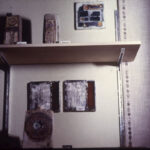
Earth Marks And Birth Works - Price Catalogue
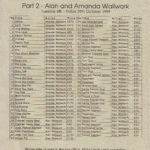
Selection - Harlequin Gallery

Pierced Crescent Slice - Harlequin Gallery

Selection - Harlequin Gallery
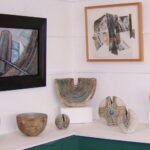
Selection - Harlequin Gallery

Walford Mill Exhibition Promo (2007)

Selection - Walford Mill

Pierced Torn Oval - Walford Mill

Selection - Walford Mill

Large Pierced Crescent - Walford Mill

Selection - Walford Mill
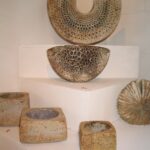
Torn Pierced Oval - Walford Mill

Pierced U Form - Walford Mill
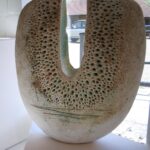
Selection - Walford Mill

Oxford Ceramics Retrospective Exhibition Promo

Seedhead 1 - Earth & Stone
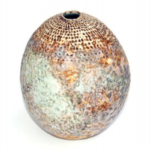
Seedhead 2 - Earth & Stone

Wide Crescent - Earth & Stone

Cleft Sphere - Earth & Stone

Tripoid - Earth & Stone

Seedhead 3 - Earth & Stone
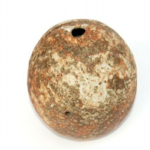
Cleft Sphere - Earth & Stone

Cleft Sphere - Earth & Stone
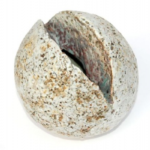
Tripoid - Earth & Stone

Cleft Sphere - Earth & Stone

Oval - Earth & Stone

Wide Crescent - Earth & Stone

Grooved Oval - Earth & Stone

Crescent - Earth & Stone
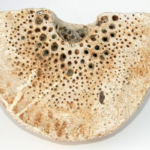
Cleft Sphere - Earth & Stone

Crescent - Earth & Stone

Crescent - Earth & Stone

Wide Crescent - Earth & Stone

Wide Crescent - Earth & Stone

Crescent - Earth & Stone

Oval - Earth & Stone

Wide Crescent - Earth & Stone
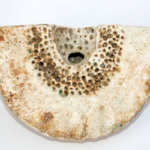
Crescent - Earth & Stone

Square Form c1960 - Earth & Stone

Spiral Oval - Earth & Stone
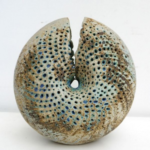
Crescent - Earth & Stone

Tall Oval c(90's) - Earth & Stone
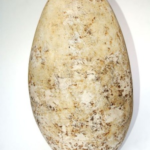
Crescent - Earth & Stone

Crescent - Earth & Stone

Bowl - Earth & Stone
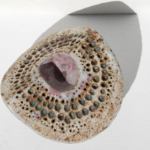
Amanda - Field Drawing 621 - E&S

Amanda - Field Mapping 517 - E&S

Amanda - Field Mapping 618 - E&S

Amanda - Field Mapping 1751 - E&S

Amanda - Path (h3) - E&S
Amanda - Moor Path - E&S
Amanda - Path Drawing - E&S
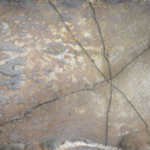
Amanda - Path - E&S

Amanda - Site 10 - E&S
Amanda - Site 11 - E&S
Amanda - Time walking 7 - E&S

Amanda - Time walking 8 - E&S

Selection - Archive Exhibition
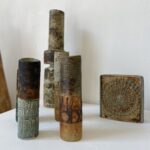
Selection - Archive Exhibition

Selection - Archive Exhibition

Selection - Archive Exhibition
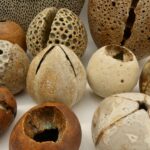
Selection - Archive Exhibition

Selection - Archive Exhibition

Selection - Archive Exhibition
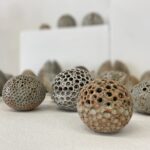
Selection - Archive Exhibition
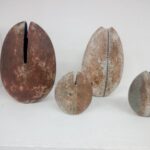
Torn Navel Oval - Archive Exhibition

Torn Oval - Archive Exhibition

Pierced Crescent - Archive Exhibition
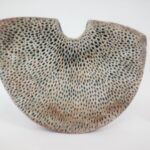
Amanda - Mapping 009 Chalbury - Archive Exhibition
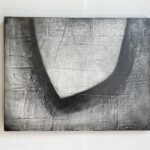
Amanda Wallwork - Archive Exhibition
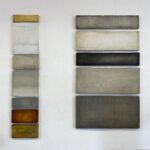
Amanda Wallwork - Archive Exhibition
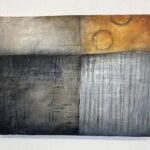
Promo Poster - Brutally Honest, Kyoto (2023)
"Random Treasure" Book Cover
20th Century Decorative British Tiles Book Cover

"Pottery in Britain Today" - Book Cover
Ceramic Review Cover - Issue 8

Ceramic Review Cover - Issue 115

Ceramic Review Cover - Issue 156

Ceramic Review Cover - Issue 160

"Live and Let Die" Film Poster

Alan's Workshop - 2012
