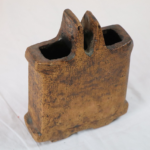
Greenwich Studios
Greenwich Studios, 19 Blackheath Road, Greenwich, London, 1960 – 65
The property was actually in Deptford, but Greenwich sounded much better. Deptford was eventually absorbed into the Royal Borough of Greenwich, but not until 1965.
There was large shop with several floors above, a basement, a yard and a complex of buildings. Alan rented space to Bernard Rooke, Sheila and Robert Fournier, amongst other artists.
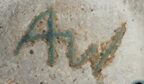
He installed a number of electric kilns for firing tiles and commissioned a new larger hotter gas fired kiln which allowed forms of up to 36 inches high to be fired. He experimented with clays and finishes including the frequent usage of a coarse fireclay with many impurities. These burnt off in the kiln producing a reduced oxygen firing. Previously unseen glaze effects came at the cost of acrid fumes. Alan made architectural forms, gaining commissions from a prestigious London restaurant. Orders for tiles continued and Alan developed a range of small to medium simple forms. He took on his first full time assistants to rough out the pots as demand was continually growing and tile production was increasing too. Formers made from clay allowed for assistants to help with the decoration. From this time onwards, the ‘W’ mark denotes assistant formed work which Alan usually decored. ‘AW’ became the mark for pieces made solely by Alan, a few of these are dated.
The Craftsman Potters Association and in particular Heals of Tottenham Court Road, led the high demand for Alan’s new work, with ‘Totemic’ designs remaining popular. Alan had as many as fourteen assistants at any given time. One of note was Louis Hudson who later produced his own work in the West Country.
Alan was approached by Henry Rothschild the leading patron and promoter of the 1950s studio pottery boom. Rothschild offered to bring Wallwork into his fold, and to promote his work in print, inviting Wallwork to exhibit at his gallery, Primavera, in fashionable Chelsea. However the proposition came with the stipulation that Alan would cease to sell his own work within twenty-five miles of London. The free spirited Wallwork declined as he was already reasonably successful and it was important for him to remain self-determining. As a child Alan had admired the ethics of freedom and equality exhorted by the anarcho-syndicalists of the Spanish Civil War, although he did acknowledged that their failure was probably inevitable due to a lack of coherent organisation.
Alan’s work was included in Design Centre Exhibitions across Europe and North America. Connections made via Heals led to Alan exhibiting in Copenhagen.
The advertising agency J. Walter Thompson asked for designs incorporating Alan’s tiles to promote OXO stock cubes. A teak casserole stand, a simple wooden board with two tiles, was decided upon and this turned out to be a great success. This commission proved to be problematic during production as the wood was prone to warping and breaking the tiles. The teak was replaced with the more stable wood iroko and the problem was solved.
The following images are from a major exhibition at the “Illums Bolgus” in Copenhagen (mid 1960’s). This was one of several exhibitions in Europe and the USA facilitated by The Design Centre.


Here follows a selection of work produced at the Greenwich Studios
Warrior Form

Large Oblong Form

Disc Form

Huge Totemic Lamp Base

Totemic Cylinders

Large Shield Form

Tall Grooved Oval Form

Large Oblong Form

Standing Stone 'Female' Form

Disc Form

Huge Lamp Base

Tall Lamp Base

Tall Three Sided Form
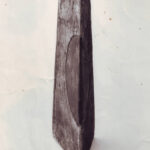
Female Oval Form
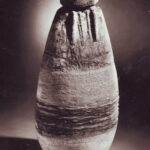
Oval Pot

Pebble Form
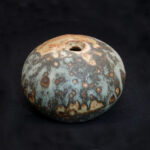
Pebble Form
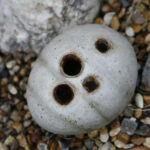
Ovoid Form (Porcelain)

Totemic Cylinder

Spiral Oblong

Oblong Form

Square Form

Stoneware Tile

Stoneware Tile

Stoneware Tile
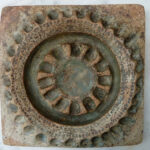
Stoneware Tile

Stoneware Tile

Pebble Form
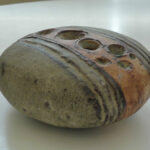
Tiled 'Casserole' Stand

Grooved Shield Oval
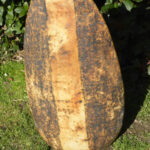
Pebble Form
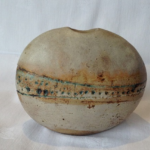
Standing Stone

Standing Stone Form

Tool Form

Grooved Oval

Axe Head Form

Lamp Base

Tapered Grooved Cylinder

Lamp Base

Oval Form
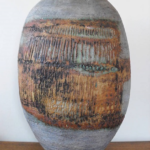
Tool Lamp Base
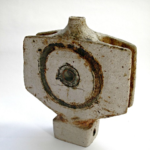
Pebble Form

Oblong Form

Totemic Cylinder

Grooved Oval

Lamp Base
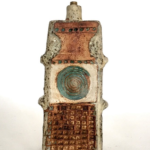
Pressed Dish
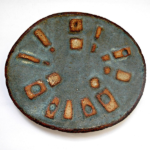
Pressed Dish

Rectangular Form

Standing Stone Form

Lamp Base

Radiant Oval

Standing Stone Form

Warrior Form
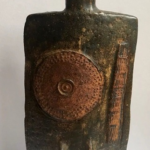
Tool Form

Oval Form

Nodule Form

Tapered Cylinder

Pebble Form

Standing Stone Form

Oblong Form
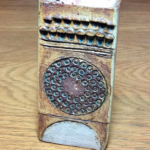
Lamp Base

Oblong Form

Oblong Form
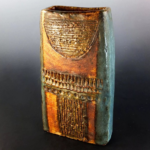
Oblong Form

Grooved Oval Form

Grooved Torso Lamp Base
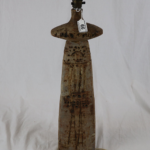
Tapered Lamp Base

Spiked Form